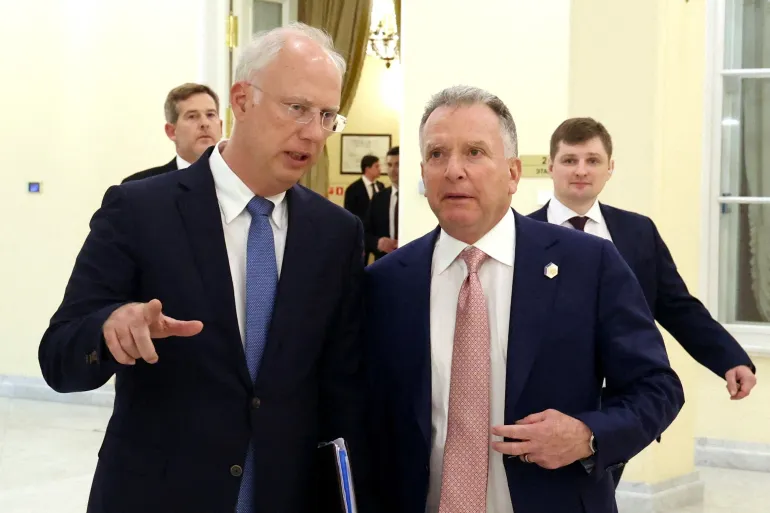
U.S. Special Envoy Steve Witkoff will travel to Moscow next week to meet Russian President Vladimir Putin, as the U.S. advances a revised peace proposal aiming to end the war in Ukraine. The trip follows intensive negotiations involving U.S., Ukrainian and European officials, who over the past days have pared down the original 28-point draft into a streamlined 19-point framework. Ukrainian and U.S. leaders say the revision addresses concerns over overly Kremlin-favorable demands, offering a more balanced starting point while leaving the most sensitive issues for final presidential-level decisions.
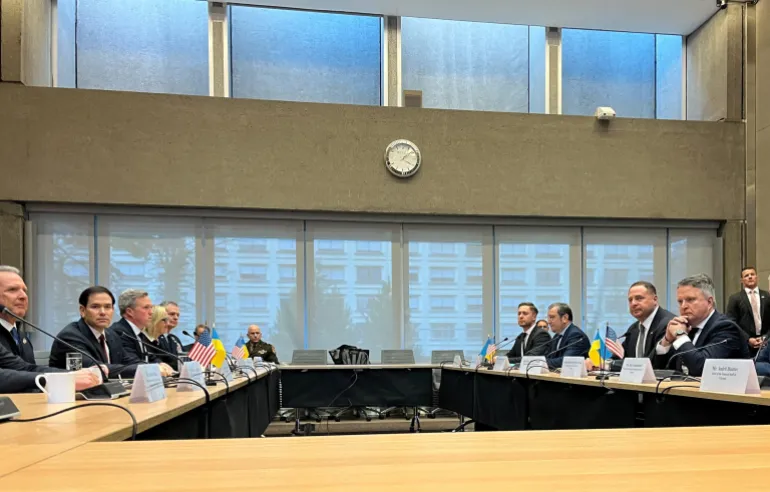
The previous 28-point plan, drafted with input from Russian and American envoys, drew widespread criticism for calling on Kyiv to cede territories and accept military limitations. Under pressure from Ukrainian and European leaders, the plan was substantially rewritten following talks held this week in Geneva. According to U.S. and Ukrainian officials, the revised version reflects Kyiv’s input and drops some of the most controversial territorial and military restrictions.
Donald Trump said the plan had been “fine-tuned,” describing the 28-point draft as “a concept” rather than a final agreement. He announced that while Witkoff will travel to Moscow to seek Moscow’s buy-in, U.S. Army Secretary Dan Driscoll will hold parallel meetings with Ukrainian officials. Trump added that he would consider meeting both Putin and Ukrainian President Volodymyr Zelenskyy but only when a final deal is near completion.
On Tuesday and Wednesday, Driscoll held talks in Abu Dhabi, while Washington and Kyiv reportedly reached agreement on most points, leaving only a few outstanding issues. A Ukrainian official described the mood after the Geneva meeting as “positive,” while cautioning that final decisions especially over territory and security guarantees remain very sensitive.
In Moscow, Kremlin adviser Yury Ushakov confirmed the upcoming Witkoff trip, but emphasized Russia has not yet received an official, final proposal. He acknowledged that Moscow had seen several unofficial document versions some of which he described as “confusing” and insisted that any agreement would require detailed expert review. Russian Foreign Minister Sergei Lavrov reinforced that Moscow would only accept a plan aligned with earlier understandings, warning a substantially altered proposal may be rejected.
READ ALSO: New Zealand Mother Gets Life Sentence Over Tragic ‘Suitcase Murders’
European leaders remain wary. European Commission President Ursula von der Leyen cautioned against any agreement that undermines Ukraine’s sovereignty or sidelined Europe’s role in continental security. She called for guarantees that Ukraine retains the right to choose its alliances and for a lasting framework that prevents future aggressions.
With both diplomacy and distrust intensifying, this week’s developments mark the most serious push yet towards a mediated end to the war. But key obstacles remain: Russia’s demand for territorial gains, Kyiv’s insistence on sovereignty and Europe’s insistence on a credible security architecture. The coming week especially Witkoff’s visit and Russia’s response could determine whether this latest attempt moves beyond framework to formal agreement.