U.S. President Donald Trump announced on November 26, 2025 that South Africa will not receive an invitation to the 2026 G20 Doral Summit to be held in Miami next year. He made the decision after his administration skipped the recent summit in Johannesburg, citing Pretoria’s alleged mistreatment of white Afrikaners and its refusal to formally hand over the G20 presidency to a U.S. Embassy representative.
Trump posted on his social media platform that South Africa “has demonstrated to the world they are not a country worthy of membership anywhere,” and declared an immediate halt to all U.S. payments and subsidies to the nation.
The U.S. boycott and now exclusion mark a severe escalation in diplomatic tensions. Trump justified the move by claiming the South African government has allowed violent persecution of white farmers allegations widely rejected by Pretoria and dismissed by independent observers as unfounded.
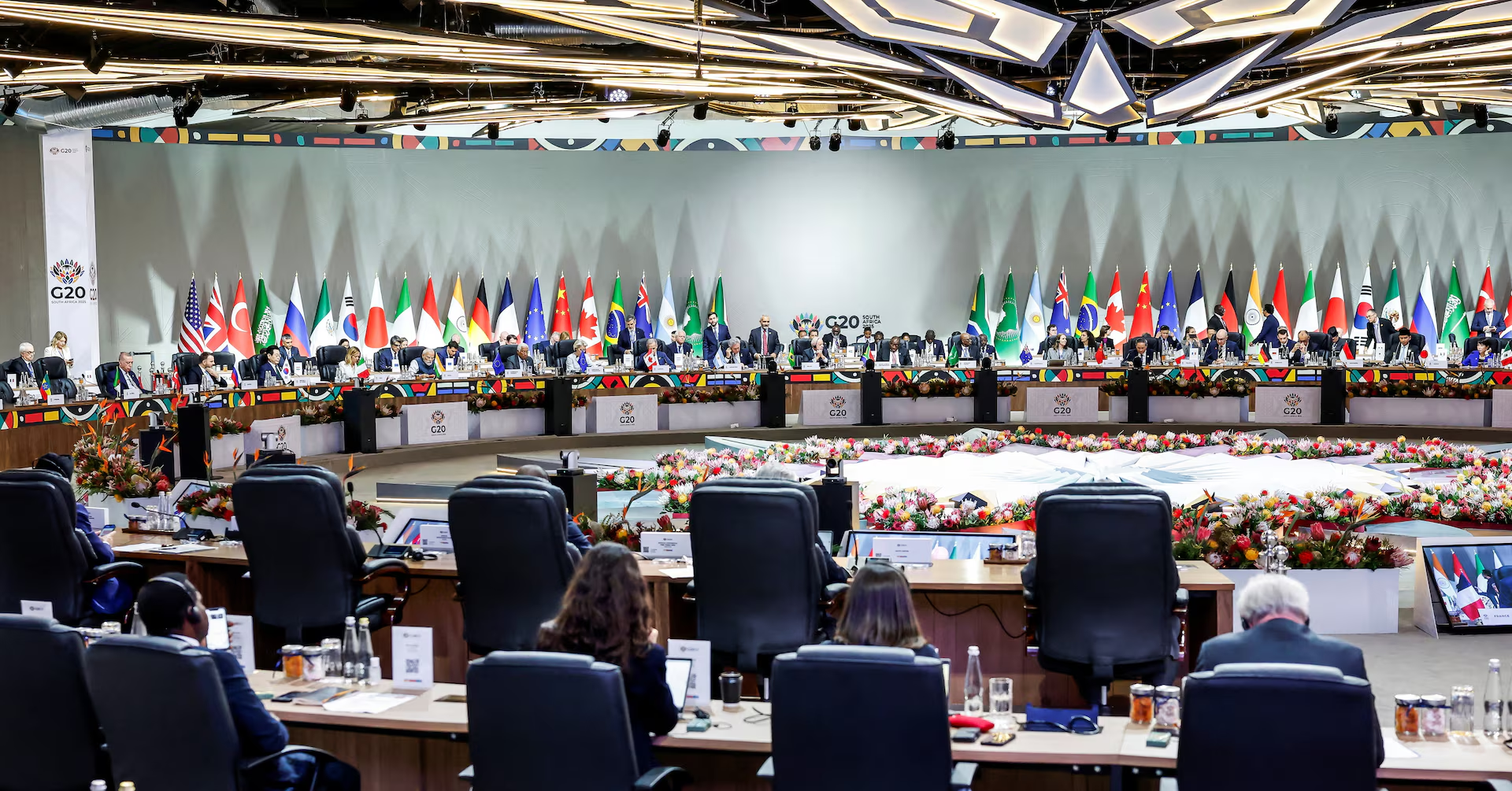
At the Johannesburg summit, the U.S. absence meant a traditional ceremonial gavel hand-over to the next G20 presidency did not occur. South Africa instead transferred instruments of presidency at a lower-level meeting in its foreign affairs ministry. Pretoria condemned the U.S. decision as “punitive” and based on misinformation, insisting that South Africa remains a legitimate G20 member chosen by consensus.
South African officials noted that the Johannesburg summit the first ever held on African soil was “hailed by all who attended” and proceeded successfully despite the U.S. absence. Several major economies signed the summit declaration addressing climate change, global inequality, and development moves the U.S. had opposed.
Analysts warn that excluding a founding G20 member from a summit weakens the forum’s credibility and could widen geopolitical fault lines. The dispute also threatens economic ties: South Africa is among the U.S.’s significant trading partners in Africa, and the suspension of U.S. financial support could impact development and bilateral projects.
READ ALSO: Thailand Airlifts Patients as Deadly Southern Floods Intensify
International reaction has been mixed. Some G20 members are calling for unity and continuity, saying multilateral platforms work only when all nations remain engaged. Others see the U.S. move as a signal that future participation could be contingent on political alignment rather than shared global priorities.
As the U.S. assumes the G20 presidency for 2026, all eyes are on how other members respond and whether multilateral cooperation will survive deepening bilateral ruptures.