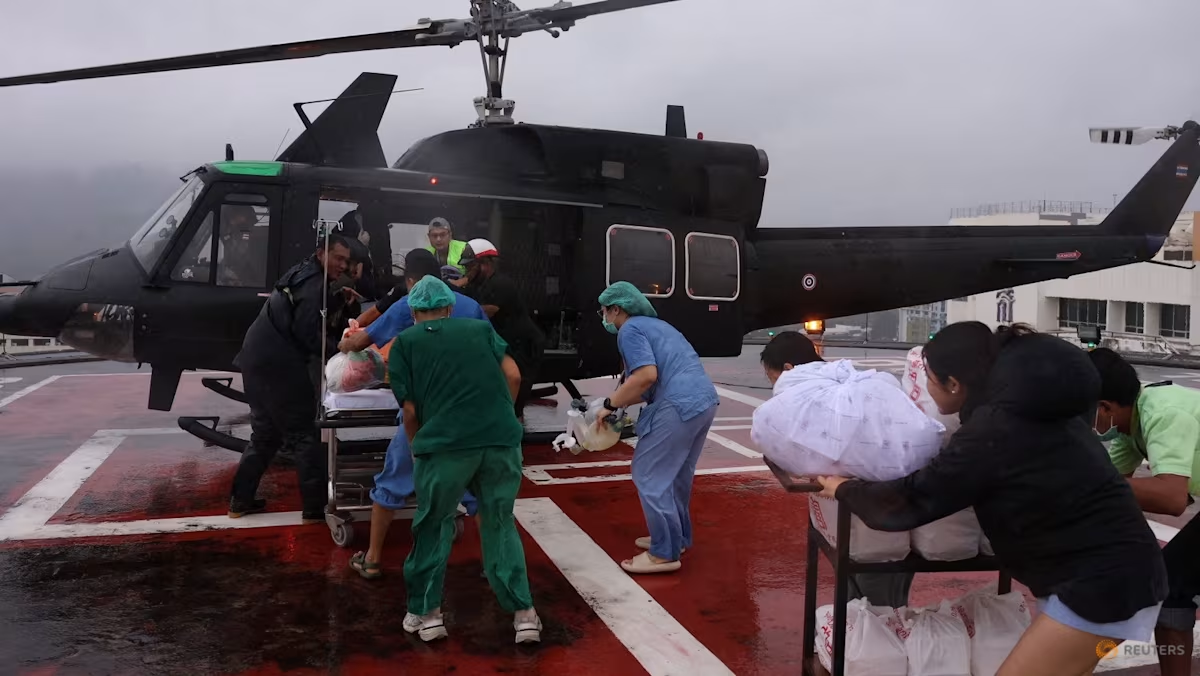
Thailand’s southern city of Hat Yai and surrounding provinces are reeling after record rainfall triggered devastating floods that have killed dozens and displaced millions. On Nov. 26, military helicopters began airlifting critically ill patients and delivering emergency supplies including oxygen tanks after floodwaters submerged major hospitals and residential areas.
The deluge, which dumped 335 mm of rain in a single day in Hat Yai the heaviest 24-hour rainfall recorded in 300 years has battered at least nine southern provinces, affecting roughly 2.9 million people and nearly one million homes. Roads are impassable, first-floor rooms lie underwater, and many residents remain stranded as water recedes slowly.
Government authorities report at least 33 fatalities so far, with victims across multiple provinces. Causes of death include drowning, electrocution, mudslides and flash floods. Officials have declared a state of emergency in the hardest-hit region to mobilize relief efforts.
The national military and navy have deployed a fleet of 20 helicopters, 200 boats, and the country’s lone aircraft carrier to support rescue and relief operations. Over 600 patients many in intensive care are being evacuated from hospitals; 12 newborns and other critically ill individuals have also been airlifted to safer facilities.
With power and clean water largely cut off, relief teams are delivering generators, drinking water, food and medical supplies. Volunteers and emergency services are coordinating to evacuate residents from rooftops and upper floors, while drones and additional aircraft are being used to reach isolated areas.
READ ALSO: Imran Khan Health Rumours Surge After Sisters Report Police Assault
As floodwaters begin to recede, authorities warn that recovery will be protracted. Many neighborhoods remain flooded, and access to shelter, medical care and basic necessities is uneven. Officials urge displaced people to remain in temporary shelters until infrastructure stabilizes.
The scale of the disaster has raised deep concerns about long-term impacts on the region’s economy, healthcare and housing. As Thailand undertakes massive relief operations, communities hope for swift restoration and support for affected families.