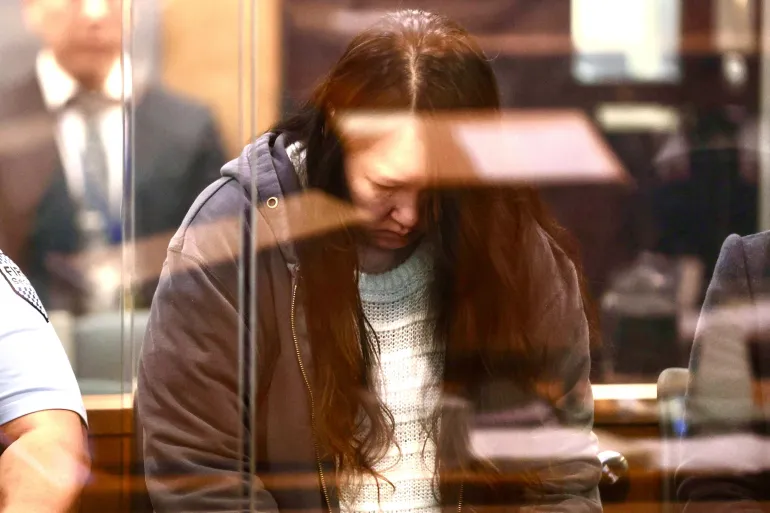
A 45-year-old woman in New Zealand has been sentenced to life imprisonment after being convicted of killing her two young children in 2018 and hiding their bodies in suitcases stored in an Auckland storage locker. The sentence, handed down on 26 November 2025, carries a minimum non-parole period of 17 years. The case has horrified communities and revived debates over mental illness, family grief, and parental responsibility.
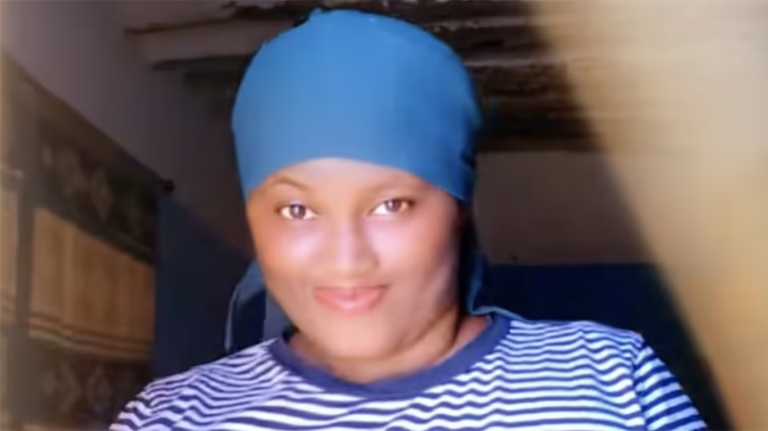
The woman, a New Zealand citizen born in South Korea named Hakyung Lee, was found guilty in September of murdering her daughter, eight-year-old Yuna Jo, and son, six-year-old Minu Jo. The children’s father had died of cancer a year earlier. Their bodies were discovered in 2022 when a family that bought the contents of an abandoned storage unit at auction opened the suitcases. Lee had fled to South Korea soon after the killings, changed her name, and was extradited back to New Zealand in late 2022.
During the sentencing hearing at the Auckland High Court, Judge Geoffrey Venning said the children were “particularly vulnerable” and described the murders as deliberate and calculated, rejecting the defence’s argument that Lee was not morally responsible due to mental illness. While acknowledging that Lee suffered from severe depression and prolonged grief following her husband’s death, the judge ruled that her actions were not the result of a psychosis that prevented moral awareness. Lee will start her sentence in a secure psychiatric facility under compulsory mental-health laws, before being transferred back to standard prison once deemed fit.
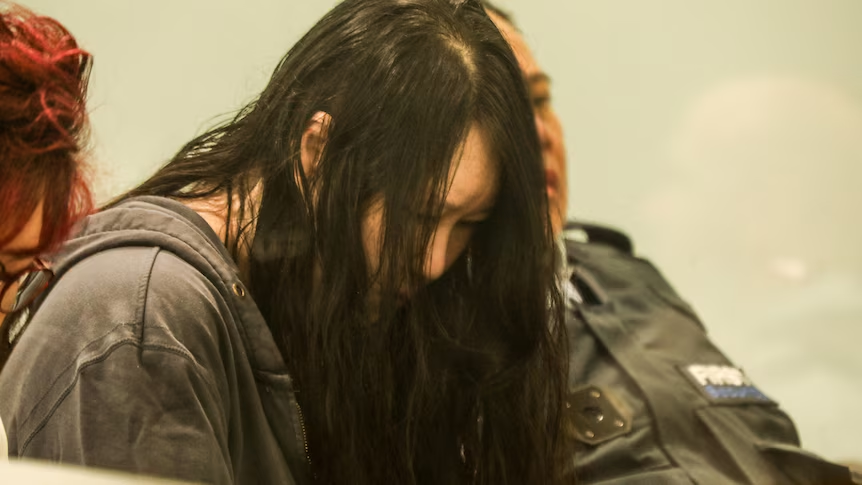
Court documents show Lee administered a fatal overdose of prescription medication by mixing it into fruit-juice given to the children, then wrapped their bodies in plastic bags and placed them in two suitcases which she stored at a suburban warehouse. After she stopped paying storage fees in 2022, the facility’s contents were auctioned at which point the children’s remains were discovered.
This grim case, now being referred to as the “suitcase murders”, has left deep emotional scars on the extended family. One of the children’s grandparents, in a statement read to the court, asked: “If she wanted to die, why didn’t she die alone?” The uncle of the victims described the loss as “a profound tragedy” that will haunt the family forever.
READ ALSO: Trump Defends Envoy After Leak Shows Russia Peace-Plan Coaching
Authorities acknowledged the cooperation of South Korean officials in the extradition and praised forensic investigators for using DNA and other evidence to link the remains to the children and to confirm Lee as the perpetrator. At the time of the crime, the children would today have been 16 and 13 years old.
The sentence the harshest available under New Zealand law ends a long-running and disturbing saga. Whether the beginning of psychiatric treatment before prison provides closure for the bereaved family remains uncertain; the children, their future, and what could have been now stand as a devastating reminder of the consequences of mental anguish left unaddressed.