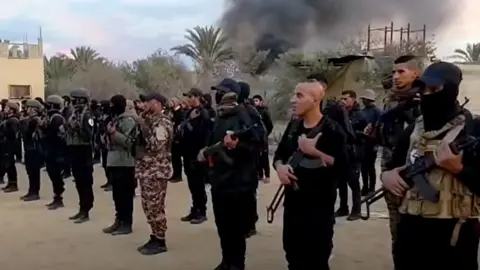
A growing network of armed Palestinian militias backed by Israel is challenging Hamas’s authority in Gaza, raising serious questions about the viability of the emerging peace plan. These groups, which include the Popular Forces led by Yasser Abu Shabab and the Counter-Terrorism Strike Force under Hossam al-Astal, are consolidating control in different parts of the enclave. Their rise, critics warn, risks fragmenting governance and undermining efforts to establish a unified, stable Gaza under international supervision.
Israeli Prime Minister Benjamin Netanyahu has publicly acknowledged that Israel has “activated” certain clans in Gaza to counter Hamas, describing the move as necessary to protect Israeli soldiers. But humanitarian agencies and analysts argue that some of these groups have criminal pasts and continue to loot aid deliveries entering the territory.
The Popular Forces, based in Rafah in southern Gaza, are accused of coordinating with Israeli forces around food distribution centres run by the Gaza Humanitarian Foundation, a private agency backed by both Israel and the United States. Aid organizations say this militia has a track record of seizing supplies from incoming trucks, worsening the humanitarian crisis.

In Khan Younis, the Strike Force Against Terror claims it is working to remove Hamas from power and establish a new local order. Its leader, Hossam al-Astal formerly of the Palestinian Authority has vowed to cooperate with international forces, rejecting influence from Qatar, Turkey, and Iran-aligned groups.
Analysts caution that while Israel’s strategy may weaken Hamas in the short term, it also risks creating new power centres that could resist integration into formal security structures. Reports suggest up to a dozen such groups have emerged across Gaza, operating semi-autonomously and complicating the political map.
READ ALSO: Israel Accused of 282 Cease-Fire Breaches in Gaza First Month
Hamas, meanwhile, is mobilizing to reassert its control. It has deployed its own security units, including the Sahm (“Arrow”) Unit, which now patrols areas targeting collaborators and looters. The group has also revived its Rada force, tasked with clamping down on internally perceived threats.
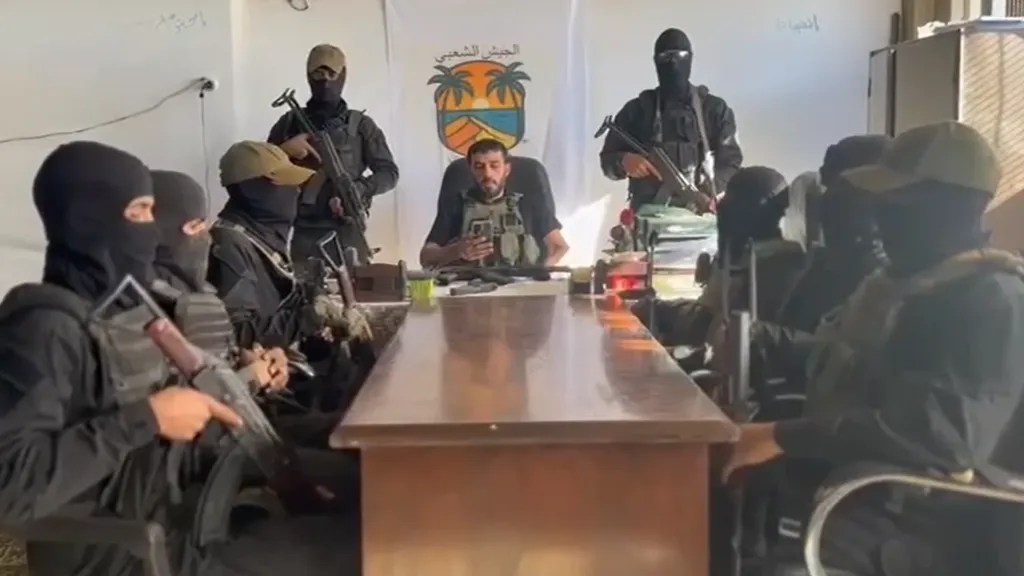
Under the proposed Gaza peace plan, a multinational stabilization force would secure the territory, while a newly trained Palestinian police force would gradually replace armed factions. But the fragmented landscape with multiple militias backed by foreign actors casts doubt on how smoothly such a transition can take place.
Critics warn that Israel’s arming of these groups could backfire in the long run, as today’s proxies may one day use their weapons independently. There are fears these militias might entrench themselves as local power brokers, thwarting efforts to build a unified and accountable governance in Gaza.