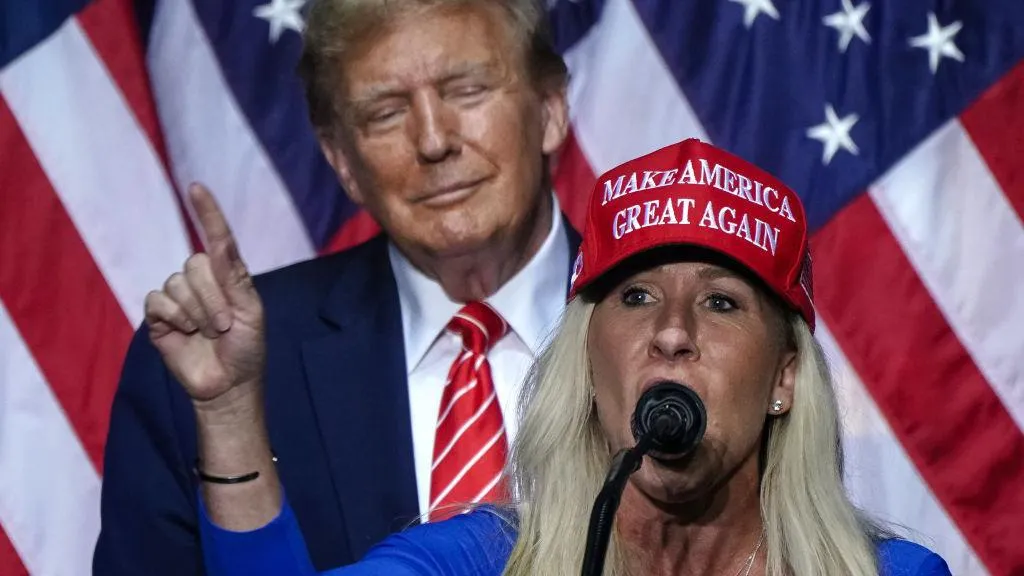
Rep. Marjorie Taylor Greene of Georgia revealed she will resign from Congress on January 5, 2026, following a bitter falling-out with former President Donald Trump over the release of Jeffrey Epstein files. Once viewed as one of Trump’s most loyal allies, Greene said her decision stems from frustration with a party she believes has sidelined her on key issues. The rupture underscores a growing rift within the MAGA movement and could reshape her party’s narrow House majority.
Greene made the announcement in a 10-minute video posted to social media, saying she refused to put her district through “a hurtful and hateful primary engineered … by the president we all fought for.” She accused her former ally of calling her a “traitor” after she pushed hard for full disclosure of Epstein’s records. In her statement, she declared, “Loyalty should be a two-way street,” and lamented what she sees as a failure by Republican leaders to advance conservative priorities.
The feud escalated as Greene publicly broke with Trump over his resistance to releasing Epstein-related documents, and later his decision to withdraw his endorsement of her. He took to his platform to label her “wacky” and threatened to back a different candidate. In response, Greene accused him of fueling personal threats against her, saying she was warned privately about her safety by security firms.
Greene cited the Epstein issue and policy disagreements including on immigration visas, artificial intelligence regulation, and foreign policy as reasons for her disillusionment. She also expressed concern that the Republican leadership was ignoring what she called “America First” principles and silencing dissenting voices within the party. While she declined to rule out future political plans, she emphasized a desire to step away from what she described as toxic dynamics in Washington.
Trump, for his part, said Greene’s departure was “great news for the country” and reaffirmed that his backing had long depended on her alignment with his agenda. He has repeatedly defended his decision to withdraw support, arguing that her insistence on Epstein transparency contradicted his political calculus even after he signed a bill to release the files under growing bipartisan pressure.
READ ALSO: Israeli Strikes Kill 14 in Gaza, Undermining Fragile Ceasefire
Political analysts say Greene’s exit highlights a deeper fracture in the pro-Trump base, as once-united figures openly clash over power, loyalty, and ideology. Her resignation also poses strategic challenges for House Republicans: with control already narrow, losing her seat will likely force a special election and could weaken the party’s hold ahead of the 2026 midterms.
Greene’s political journey has long been marked by controversy from promoting conspiracy theories to her confrontational style in Congress. But this split with Trump, over something as sensitive as Epstein-related transparency, has been one of the most personal and public in her career. Her departure marks a turning point for both her and a movement that has struggled to contain internal dissent.